



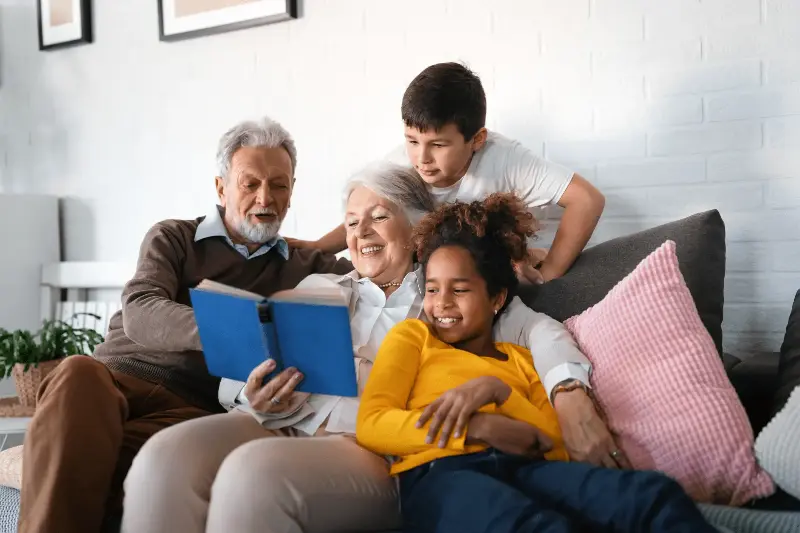
As families become more spread out and everyday support systems shift, grandparents are taking on a bigger role in children’s lives.
In 2026, with many young people struggling with loneliness and anxiety, close relationships with grandparents can offer much-needed connection and reassurance.
Kenneth Barish, Ph.D., clinical professor of psychology at Weill Cornell Medical College and author of The Art and Science of Parenting and Grandparenting, said this reflects broader changes in the way families and communities function today.
“We are more isolated,” Barish told Newsweek. “American children are reporting much more loneliness and communities are not as strong as they used to be. The more support and family connection that children can have [the better].”
A Supportive, Not Supervisory, Role
For many grandparents, one of the main challenges is finding the right balance between offering support and overstepping.
Barish, who is also a grandfather of two, suggested rethinking the role entirely. “We are consultants to parents, we are not supervisors,” he said.
Rather than stepping in with criticism or firm opinions, grandparents should offer advice only when invited—and do so with humility.
He also recommended shifting away from focusing on discipline toward collaborative problem-solving. Instead of asking whether a child should be punished, conversations should center on concerns.
“We… acknowledge their concerns, present our concerns, and then ask, ‘What are your ideas?’ That’s a whole different kind of conversation.”
This approach models respectful communication and helps maintain trust between generations.
The Power of Listening
While many grandparents may feel their role is to guide or teach, Barish said one of the most powerful things they can do is listen.
When children feel heard, their feelings—whether anxiety, frustration or loneliness—often become less overwhelming. Listening also reassures them that difficult moments are temporary.
Simple routines can also make a difference. Barish suggested setting aside small pockets of time, such as a few extra minutes at bedtime or during a walk, to talk about the day.
Children are also more likely to open up when adults show genuine interest in what matters to them.
In his therapy practice, Barish will ask children what they like to do. If they are feeling shy or upset, he asks them what they find unfair in their lives.
“If we acknowledge those feelings, then we have a better chance of helping them open up,” he added.
Teaching Empathy in a High-Pressure World
In a culture that often prioritizes achievement, grandparents can help children build empathy and a sense of purpose.
Barish pointed to research showing that children develop stronger moral understanding when adults talk not only about their own feelings, but also about the needs and experiences of others.
A 2014 study found that when parents talk with children about emotions and mental states, such as their feelings, thoughts, and intentions, it is linked to children’s empathic helping behavior.
Encouraging acts of kindness—whether helping someone in the family or the wider community—can further reinforce these values.
“We can talk about what others do for us,” Barish explained. “Talk about the first responders who save our lives. Talk about doctors [and] scientists who discover new medicines every day that are helping us live longer, healthier lives. If we talk about the meaning, so the principle would be to make learning meaningful.”
Sharing Stories that Shape Identity
Grandparents also have a unique opportunity to connect through storytelling. Sharing personal experiences, including challenges from their own childhoods, can help children feel less lonely.
“When my daughter was 3 years old, every night as she was going to bed, she asked me to tell a story about when I was a little boy,” Barish said. “Grandparents really have an opportunity here. Kids love personal stories. It makes them feel that they’re not alone.”
Don’t Forget to Play
Amid advice on communication and emotional support, Barish highlighted one simple but essential ingredient: fun.
“Fun and play… are actually essential nutrients of children’s emotional health and their social maturity,” he said.
Spending time playing, laughing or simply being present helps strengthen relationships and supports children’s social development. These moments also build a sense of joy and security.
For many grandparents, this comes naturally. “When our grandchildren are here with us or when we’re at their home, as soon as we wake up in the morning, the first thing they say is, ‘Ma, pa, can you play with us?'”
As childhood becomes more complex, grandparents remain a constant source of connection and reassurance.
By listening, offering support without judgment, and spending meaningful time together, they can help children navigate an increasingly challenging world.