



Have you noticed how the world is becoming ever more homogenised? It’s as if at some point in the recent past we reached a consensus on how things ought to be and have been busily erasing the notion of distinctiveness ever since.
Remember when mobile phones, for instance, came in a variety of shapes and sizes? You could even purchase interchangeable covers to make yours really stand out. Today we all gawp at the same featureless black slab.
Popular music, interior decoration and our once-vibrant high streets have followed the same soulless pattern. We even dress alike in matching grey sports-casuals.
Bloated lookalike SUVs
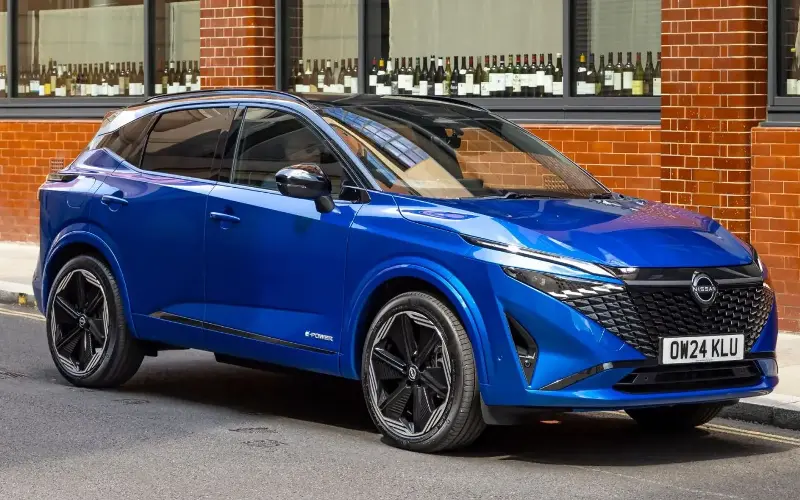
In almost every aspect of life, deadening orthodoxy has supplanted the colourful eccentricities that used to define us – and there are few places where this hostage to homogeneity has been more in evidence than with car design, where every new vehicle appears to have been squeezed through the same bloated SUV-shaped cookie-cutter.
Older readers will remember when Minis, Capris and Renault 5s had distinctive personalities. Today, even these cynically re-imagined classics resemble every other mid-size SUV blob.
Other than minor headlight and grille tweaks, I challenge anyone to fit a sheet of rice paper between the new Nissan Qashqai, Kia Sportage and Volkswagen Tiguan. The proportions are virtually identical and you’ll be hard pressed to find one in a “colour” that isn’t either grey or black. Even dashboards have been reduced to little more than giant iPads.
Mass appeal
According to an ex-employee at Ford’s design department, SUVs were consciously made to have the broadest possible appeal, thereby removing the need for individual flair and the inherent risks that come with originality: “It’s all about the bottom line in the end.” A spokesperson for Kia argues that the dramatic shift towards SUVs has been largely driven by consumer preferences: “Drivers like the elevated driving position and overall design.”
Environmental considerations have inevitably played a part. According to Kia, “the raised body and elevated ground clearance of an SUV makes it easier for engineers and designers to accommodate battery packs and electric motors in line with the worldwide regulatory push towards low-emissions vehicles”.
From an economic perspective it makes sense not to scare the horses. Keep models samey and inoffensive and customers are left with fewer choices. If every manufacturer is churning out tiny variations of the same basic design, brand loyalty becomes the chief deciding factor when making a purchase. Meet the new BMW, same as the old BMW.
Jaguar dares to be different
One noticeable exception to the current conformity has been Jaguar’s foray into luxury EV saloons; we all remember the ferocious backlash that greeted the “Barbie pink” Type 00’s advertising campaign in 2024. No wonder manufacturers have become so risk-averse.
The shift from quirky estates and hatchbacks to today’s standardised suburban assault vehicles began around 2015 and has grown exponentially ever since. Unlike the humongous gas guzzlers that dominated the US market in the early 2000s, the mid-size versions were thought to be better suited to our narrow, twisty roads. Judging by the number of school-run gridlocks I’ve witnessed recently, even the mid-size versions are too unwieldy for most UK car journeys. Huge 4x4 “Chelsea Tractors” remain the bane of city life.
Decades of development
Before the outbreak of SUV uniformity, car design had tended to go in cycles, from the simple boxed profile of the revolutionary 1922 Austin Seven to the curvaceous 1950s and 1960s saloons. The 1940s saw a dramatic transition from traditional pre-war austerity styling to a more optimistic post-war modernity, influenced by an “export or die” government mandate. This led to bulkier, more comfortable cars aimed at an international market, as with the distinctly American-looking Austin A90 Atlantic.
The 1970s were defined by a proliferation of functional hatchbacks such as the audaciously awful Austin Allegro and Leyland’s gruesome threesome, the Marina, Princess and Ambassador. These automotive oddballs may have been clunky, unreliable and horrible to drive, but at least they were distinctive.
The early 1980s saw another major landmark with the launch of the Ford Sierra, a family hatchback that literally broke the mould by turning it to jelly. The Sierra’s futuristic “jelly mould” appearance felt like a real game changer, leaving its boxy predecessor, the Cortina, ripe for the scrapheap.
Distinctive identities
The Sierra may have dragged car design out of the bleak 1970s, but while competing manufacturers took inspiration from its sleek new look, they still worked hard to maintain distinctive brand identities. Even the Sierra’s closest rival, the Vauxhall Cavalier Mk2, had a very different vibe. And you would never have mistaken a Vauxhall Astra for a Ford Escort, an Austin Maestro for a Vauxhall Chevette, or a Ford Fiesta for an Austin Metro. Each model had its own idiosyncratic visage, a quality sorely lacking in today’s faceless facsimiles.
Perhaps SUV designers should take inspiration from the mobile phone pioneers and invent interchangeable car covers; anything to bring back a bit of variety to today’s soul-sapping uniformity.
Changing face of car design
Back in 1966, the top five bestsellers came in a range of shapes and sizes characterised by slim profiles, tall cabins, flat sides and sharp edges.
Apart from the Vauxhall Corsa supermini, the top five bestsellers so far this year are all mid-size SUVs with rounded, fattened bodies and a standardised profile that leaves little room for individual personality. Other than its fancy grille, the new Jaecoo is business as usual for the SUV.
Top five bestselling UK cars 2026 (so far)
- Jaecoo 7
- Ford Puma
- Nissan Qashqai
- Kia Sportage
- Vauxhall Corsa
Top five bestselling UK cars 1966
- BMC 1100/1300 (ADO16)
- Ford Cortina Mk1
- Mini
- Vauxhall Viva HA
- Hillman Hunter